Pumpkin Cherries Bow Embroidery Design: A Designer’s Honest Take
When a new embroidery file lands in my library, my first thought isn't just about how cute it is. I’m thinking about how it will actually perform under the needle, how it will look on a finished product, and whether it’s a design I can confidently use for clients or my own shop. Let’s walk through that process with the Pumpkin Cherries Bow Embroidery Design.
The Immediate Charm & Where Its Personality Shines
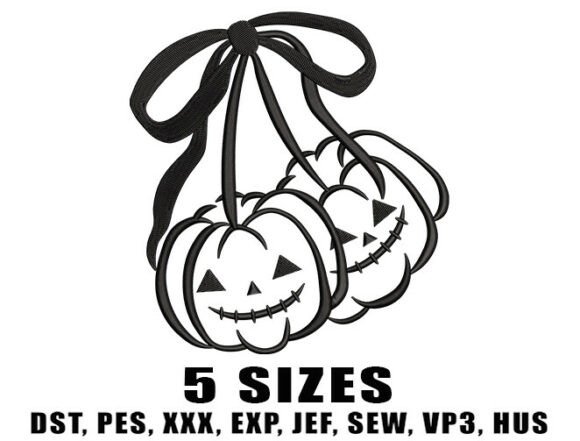
This design’s concept is straightforward: three smiling jack-o’-lanterns tied together with a ribbon. The first impression is pure, friendly Halloween charm. It’s spooky-adjacent, more sweet than scary, which gives it a wide appeal. The layout feels balanced, and the detail level—the pumpkin faces, the ribbon bows—looks manageable without being overly simplistic. This isn’t a dense, intimidating file; it has a light, cheerful personality. That tells me it naturally belongs to projects where a playful, approachable holiday vibe is key. Imagine it on a child’s trick-or-treat bag, a cozy fall sweatshirt, or a kitchen towel for October. It’s a narrative design, telling a little story of bundled-up pumpkins, which always adds value to a handmade product.
Putting It to Work: Real Project Scenarios
Let’s get practical. I’m envisioning a custom order for an embroidered tote bag, intended as a Halloween gift. I’d consider the Pumpkin Cherries Bow Embroidery Design here. Its size and composition suggest it would sit nicely on a bag panel, not overwhelming the fabric. For a baby item, like a bib or a little sweater, the friendly faces would be perfect—it’s festive without being frightening. As a patch, it could be brilliant; the defined shapes would translate well to a standalone applique design, iron-on or sew-on, for a jacket or backpack.
For my small business merchandise, this is a solid seasonal addition. On an apron for a festive bake sale, or a pillow cover for autumn home decor, it creates a specific, desirable holiday motif. In an Etsy listing or a printable mockup, the clear, cheerful imagery would communicate the product’s purpose instantly to a potential buyer. That’s crucial for engagement. For commercial embroidery projects, say for a local boutique’s branded holiday tees, it offers a recognizable, scalable Halloween theme that feels consistent and professional.
Where Caution & Smart Testing Come In
No design is universally perfect, and a thoughtful maker considers its limits. The ribbon ties and the pumpkin smiles likely involve smaller details and potentially tighter corners. On very small hoop sizes or on highly textured fabrics like some towels, those finer lines might need extra attention to maintain clarity. On stretchy fabric, like a t-shirt, proper stabilizer is non-negotiable to prevent distortion of those smiling faces.
On dark fabric backgrounds, the design’s visual appeal hinges entirely on thread color contrast. A test on scrap fabric is essential—you might find you need to brighten or alter a thread palette to keep it popping. For products destined for frequent washing, like apparel or kitchen linens, reviewing the stitch density in the fill areas is wise. Too dense, and it becomes stiff; too light, and it might wear quickly. The design seems balanced, but only stitching it out confirms this.
For curved surfaces like caps, the layout’s width might need adjustment to fit the contour without losing the ribbon ends. Always, always, test it in black and white mockups too. This helps you see the design purely as shape and composition, stripping away the color charm to judge its structural integrity.
Beyond the Stitches: The Business & Customer Impact
Using a design like this isn’t just about mechanics; it’s about perception. When stitched cleanly, with good thread choices and on appropriate fabric, the Pumpkin Cherries Bow Embroidery Design elevates a project. It looks intentional and skilled, boosting the product’s value and customer trust. For a handmade presentation, it offers a complete, themed idea rather than a generic motif, which enhances giftability. Is it a recognizable Halloween design? Absolutely. That recognition is a professional asset, helping buyers immediately connect your product to the holiday.
For brand consistency, if your shop leans into seasonal, festive items, this file can become a reliable part of your autumn collection. It engages buyers because it’s specific yet adaptable—they can picture it on the item you’re selling, or imagine it personalized for their own needs.
A Few Designer Notes Before You Hoop Up
My final thoughts before I’d run this machine embroidery design for a real client or product are always a checklist. Test it on scrap first, in both light and dark fabric versions if possible. Check the actual file for any tiny elements—the bow knots, the pumpkin eyes—to ensure they’ll stitch out clearly in your chosen hoop size. Confirm the licensing terms. Can you use it for commercial projects, or is it for personal use only? This is critical for small shop products and Etsy sellers. Never assume.
Plan your thread colors considering contrast and fabric background. A vibrant orange on a cream sweatshirt will sing; on a black hoodie, you might need to go even brighter or add a backing layer for brilliance. Consider whether the design would work as an applique design base, simplifying the process for bulk projects. And finally, think about the end product’s life. Is it a decorative pillow cover or a heavily used tote? That influences your choices on stabilizer and even stitch type emphasis.
The Pumpkin Cherries Bow Embroidery Design has a lovely, inviting character. By approaching it with this practical, real-use mindset, you transform a digital embroidery file from a pretty picture into a dependable asset for your craft business, your client work, or your personalized gifts. That’s where the real magic happens—not just in the design, but in the thoughtful execution.